
Does Japanese Knotweed Damage Foundations and Houses? What the Evidence Actually Says
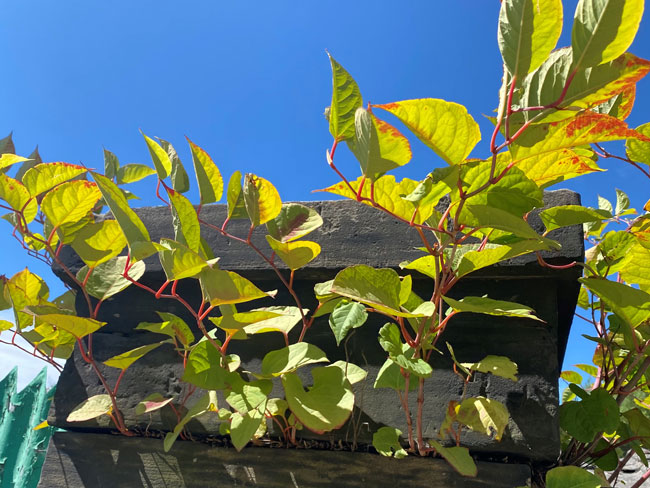
Japanese knotweed has a fearsome reputation. Stories of it smashing through concrete and bringing down houses have been repeated in newspapers for years, and for a long time UK mortgage lending treated knotweed within several metres of a house as a serious problem. So does Japanese knotweed actually damage foundations?
The short answer is that the evidence for knotweed causing serious structural damage to soundly built houses is limited. The more common, real-world problems are with lighter structures: paving, patios, garden walls, drains, sheds and outbuildings. That distinction matters, because it shapes both how worried you should be and which treatment makes sense.
Where the "Knotweed Destroys Houses" Idea Came From
Knotweed is a vigorous plant. In the growing season it can grow rapidly, its rhizome (underground stem) can spread outwards and downwards, and its shoots will exploit any weakness in hard surfaces. Seeing shoots come up through a tarmac drive or between patio slabs is genuinely striking, and it is easy to imagine the same thing happening to a house.
For years, the cautious approach in property lending reflected that fear, with blunt distance-based rules. Over time, research and practical experience led to a more nuanced view. The RICS guidance on knotweed in residential property moved towards assessing the actual situation on each site rather than applying a single distance rule. Our guide to RICS 2022 knotweed guidance explains the categories used today.
What the Evidence Suggests About Foundations
Academic and industry studies in the UK have generally found that knotweed is not more likely to cause structural damage to buildings than many other plants and trees, and that serious structural damage to well-built houses from knotweed alone is uncommon. Where problems occur, they tend to involve existing weaknesses: cracks, poor joints, old or shallow construction, or lightweight structures.
In simple terms, knotweed is opportunistic rather than destructive. It will grow into gaps and weaknesses that already exist, and can widen them, but it is not typically able to break through sound, modern concrete foundations on its own.
Important: this does not mean "ignore it"
Even where structural risk is low, knotweed is still a legal and practical issue. It must be disclosed when selling, can affect mortgages, and allowing it to spread to neighbouring land can lead to nuisance claims.
Send your photos →The Real Risks: Where Knotweed Does Cause Problems
Most property issues linked to knotweed involve features around the house rather than the house itself:
- Paving, patios and driveways: shoots can push up through joints and lift lightweight paving or thin tarmac.
- Garden walls and boundary walls: particularly older walls with weak mortar or shallow footings.
- Drains and pipes: rhizome can exploit existing cracks or failed joints in older drainage, though modern sealed pipes are less vulnerable.
- Sheds, garages and outbuildings: lightweight structures and thin slabs are more exposed than the main house.
- Fences and retaining features: knotweed often grows along and through fence lines. See what to do when it comes from next door.
- Conservatories and extensions: depending on how they were built, these may have lighter foundations than the main house.
Knotweed can also make gardens harder to use and maintain, and its presence can affect how buyers and lenders view a property. For many owners, the financial and practical impact is a bigger concern than physical damage.
What Affects the Level of Risk?
- Distance: knotweed right against a building is assessed differently from a stand at the end of a long garden.
- Condition of nearby structures: existing cracks and old joints are more vulnerable.
- Age of the stand: established stands typically have more extensive rhizome.
- Disturbance: cutting or digging can encourage spread and make control harder.
- Visible effects already present: growth through paving or walls is a key factor in how the site is assessed.
When Is Knotweed Likely to Be Assessed as Category A?
Under the RICS approach, the more serious categories are generally used where knotweed is close to habitable space and causing, or likely to cause, damage or a significant effect on the use of outside space. In practice, a stand close to the house with visible effects on hard surfaces or structures is more likely to be assessed in a higher category than a stand well away from the house with no visible effects.
Your surveyor will make that assessment on site. If you have a report already and are not sure what the category means for you, our mortgage help service can explain the next steps.
Herbicide or Excavation: Which Is Right Near a House?
The right method depends on what is affected and what you plan to do with the ground.
When herbicide treatment is usually suitable
- The knotweed is in soft ground, such as lawns, borders or uncultivated areas.
- There are no plans to dig in the area soon.
- You want a cost-effective plan that a lender will accept, ideally with a guarantee.
When excavation is more likely to be recommended
- You are planning an extension, garden room, new drainage or landscaping in the affected area.
- Knotweed is growing through hard surfaces that need repairing or replacing anyway.
- You need the ground cleared to a tighter timescale.
- There is a need to physically remove rhizome close to structures.
Often the answer is a combination: herbicide treatment to control the plant, with targeted excavation and a root barrier where knotweed is close to structures or a boundary. Our remediation section gives an overview of each method, and our knotweed removal cost guide sets out typical guide price ranges.
What to Do If Knotweed Is Close to Your House
- Do not cut, dig or spray it yourself; this can spread it and make treatment harder.
- Take photos of the plant and any affected paving, walls or structures, with dates.
- Get a specialist survey to confirm identification and measure distances. See survey costs and what reports include.
- If structural movement is suspected, also speak to a structural engineer or building surveyor: knotweed may not be the only cause.
- Put a professional management plan in place, especially if you plan to sell or remortgage.
Will Damage Be Covered by Insurance?
Many home insurance policies exclude knotweed treatment, and cover for damage varies. Check your policy wording carefully and speak to your insurer. If you are buying, ask whether any existing treatment guarantee will transfer to you; our guide on buying a house with Japanese knotweed covers this.
Worried about knotweed near your walls or patio?
Send us photos of the plant and anything it is growing through. We will review within an hour and tell you honestly how concerned you need to be.
Send your photos →Japanese knotweed deserves to be taken seriously, but it does not usually deserve the horror-story reputation. With accurate identification, a clear assessment and a professional plan, the real risks to property can be managed. For help recognising it, start with our identification guide or send us your photos.
Knotweed Compared With Trees and Other Plants
It can help to put knotweed in context. Many common garden plants and trees can affect buildings and hard surfaces. Large trees close to houses on shrinkable clay soils, for example, are a well-known cause of subsidence because of the moisture they draw from the ground. Climbing plants can damage weak mortar, and roots from many shrubs and trees can enter defective drains.
Knotweed is different mainly in its persistence and its ability to regrow from small fragments of rhizome, which is why it is treated as a special case in property transactions and waste law, rather than because it is uniquely capable of destroying buildings. If you have cracks in your house, a building surveyor or structural engineer is the right person to investigate the cause; it may be unrelated to knotweed altogether.
Why Lenders Still Care, Even If Structural Risk Is Low
If the risk to foundations is lower than its reputation suggests, why do lenders and buyers still take knotweed so seriously? The answer is mostly about cost, saleability and legal risk rather than walls falling down:
- Treatment costs money and takes time, which affects what the property is worth to a buyer.
- Knotweed must be disclosed on the TA6 form when selling, and failing to disclose it can lead to claims.
- Allowing knotweed to spread onto neighbouring land can lead to private nuisance claims.
- Contaminated soil is controlled waste, which makes building work and landscaping more expensive.
A professional management plan, treatment records and an insurance backed guarantee address most of those concerns, which is why they are usually what lenders ask for.
Frequently Asked Questions
Can Japanese knotweed break through house foundations?
The evidence suggests serious structural damage to soundly built house foundations from knotweed alone is uncommon. It tends to exploit existing cracks and weaknesses rather than breaking through sound concrete.
What damage does Japanese knotweed typically cause?
Most issues involve paving, patios, driveways, garden walls, older drains, sheds and outbuildings, plus the effect on property sale and mortgage processes.
Can knotweed damage drains and pipes?
Rhizome can exploit existing cracks or failed joints in older drainage. Modern sealed pipes are generally less vulnerable. A drainage survey can confirm the condition of pipes.
Is excavation better than herbicide if knotweed is near my house?
Not always. Herbicide is often suitable in soft ground with no building plans. Excavation is more likely where you plan to dig, where hard surfaces are affected, or where time is short.
Will knotweed near my house stop me selling?
Not usually, if it is disclosed and professionally managed. Buyers and lenders generally want a survey, management plan and ideally an insurance backed guarantee.